
The European Scaling Paradox
Europe’s ambition for digital sovereignty repeatedly collides with a persistent structural weakness: the scale-up gap.
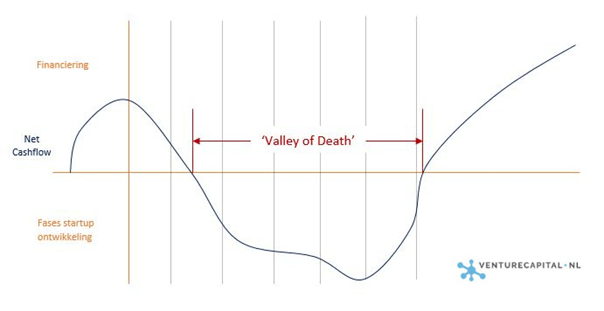
The EU demonstrates remarkable strength in fostering innovation at the early stages. It is a global leader in research and produces world-class startups in advanced technologies. Yet, Europe continues to struggle to get past the "valley of death": turning these ventures into resilient, global market-leading European champions.
This is the European scaling paradox. Innovation is abundant, but scale is elusive.
The challenge is a known barrier, and there is no dearth of reports, including the recent (2025) report. The EU’s recent Startup and Scaleup Strategy clearly illustrates the challenges: Fragmented markets, risk-averse capital, and regulatory complexity all contribute to a "double valley of death" where startups fail both to enter the market and to scale within it.
The barriers are real, and addressing them is undoubtedly essential. But they share a common feature: they predominantly target the supply side of innovation.
What they leave largely unresolved is the demand-side question, arguably the decisive one:
Who becomes the first large, credible customer that validates, de-risks, and pulls a sovereign European scale-up into the market?
Without that anchor demand, even the most technically excellent solutions struggle to survive, let alone scale.
Procurement as a Scale-Up Engine
Europe already has a tool for answering this issue at scale. Every other study report has already recognized this tool. Public procurement.
With nearly €2 trillion in annual spending, European public procurement represents one of the largest coordinated sources of demand in the world.
In theory, it could function as a powerful market-shaping instrument.
In practice, procurement is still treated largely as a compliance-driven cost function. The potential scale of this missed opportunity is crystallized in a national context: the Netherlands oversees more than €73 billion in annual public procurement budgets, but sees only about €3 billion in startup investment.
his gap isn't a failure of innovation; it's a profound underutilization of a strategic lever.
EU-level strategies acknowledge this, identifying the "underuse of public procurement" as a key barrier and proposing to simplify procedures to boost demand for innovative solutions. Progress has been slow, in part because the debate often falls into a false choice between two extremes: either procurement supports complete sovereignty through protectionism, or it stays completely market-neutral and does not affect business. As argued in the previous post, this framing is deeply constraining.
Smart Resilience: From Principle to Pragmatic Playbook
This is where the Dutch approach of smart resilience, focused on building "strategic relevance and control," becomes operationally decisive. Rather than asking whether procurement should be “sovereign” or “market-driven,” the smart resilience lens asks a more pragmatic question:
Which public instruments should be used, at which stage of the innovation chain, to build strategic resilience?
Applied to procurement, this shifts the conversation from ideals to execution. It empowers the public sector to act not just as a buyer, but as a strategic first customer.
In the initial and most precarious phases, tools such as Pre-Commercial Procurement (PCP) hold significant importance. PCP enables public buyers to acquire research and development services, fostering innovative solutions that are not yet available. The state helps share the risk with suppliers by funding competing R&D projects in phases, from design all the way to prototype. This way, they’re turning technological potential into solutions that are ready for the market. This process is super important because it gives companies a key "first customer reference," helping them gain a competitive edge in the wider market.
At the scale-up stage, procurement can subsequently shift to outcome-based tenders. In this context, demand transforms into a predictable and scalable entity. Innovators address specific, enduring public needs through proven solutions. This is the moment when the “valley of death” can be overcome not via subsidies, but through credible, scaled demand. This approach is focused on a clear mission: it establishes the desired outcome and allows competition to provide the optimal solution.
Market Creation : The Missing Link in Europe’s Sovereignty Debate
Europe’s digital sovereignty debate has matured conceptually. The language has shifted from autarky to resilience, from protectionism to strategic relevance. What remains missing is disciplined execution at the market-creation layer.
Procurement, when used intelligently, can connect Europe’s research strength to real markets, its startups to scale, and its sovereignty ambitions to tangible capabilities. Not by shielding firms from competition but by ensuring that strategically relevant innovation is not starved of its first real "large scale" customer.
If Europe wants sovereign capabilities that actually exist at scale, it must stop treating procurement as an administrative afterthought and start using it as a strategic instrument.
References
- EU Startup and scaleup strategy
- Analysis of the EU Startup and Scale-up Strategy: "Choose Europe to start and scale
- How Dutch facilities and procurement budgets can be leveraged for startups and scale-up growth
- Leveraging Public Spending for Digital Sovereignty
- Pre-Commercial Procurement
- Death Valley Curve: How to Calculate it So You Can Avoid It
- TNO Strategic Plan 26-29: Pushing Boundaries
Disclaimer: This post reflects my own opinions and my default dry humor,not the thoughts, strategies, or plans of my employer. Any perceived shade is purely accidental and absolutely not aimed at anyone in particular. Challenge me, disagree with me, or add your own wisdom in the comments.