
TL;DR:
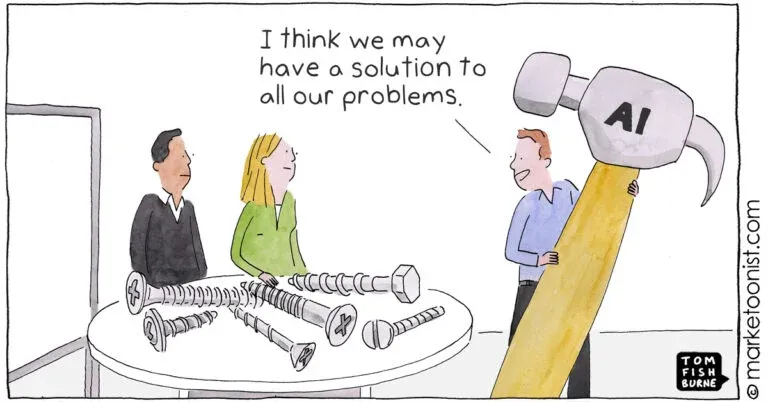
This post, like the other 100 regurgitated “groundbreaking AI insights” flooding your LinkedIn feed today, provides neither useful guidance nor meaningful insight.
It is a post for business leaders or anyone who wants to use AI tools to understand emerging concepts and BS with more confidence.
Core Message
AI minions (soon-to-be overlords) are a boon for business leaders or anyone who doesn’t want to spend time deep-diving into technical concepts.
You don't have to stop yourself from using them to gain superficial knowledge (however tempting it is). You can actually use them to deep dive into complex ideas by strategically outsourcing the grunt work, allowing you to get right to the "aha" moments without sacrificing your entire weekend.
Continual adoption of the method outlined in this post will inevitably lead to cognitive atrophy or AI-Induced Cognitive Atrophy (AICICA).
This only applies to individuals who can think critically, though, and most management leaders appear to be immune.
It’s Been a While…
The last time I posted anything on LinkedIn was almost six years ago. It was then that I began my machine learning adventure, just as production-grade enterprise AI was gaining traction. I've been learning quietly for all these years, but it got harder and harder to keep up with how quickly things change, especially when you have a real life (no shade to LinkedIn's "thought leaders").
The constant flood of new models, techniques, and benchmark posts on my LinkedIn feed had already pushed me to the brink of AI fatigue. I had two options:
- Turn off LinkedIn posts and exit the AI-fog hellscape, or
- Do the sensible thing and add to the noise.
Naturally, I chose chaos.
The Anthropic Article
It all started when I skimmed Anthropic’s article Code execution with MCP: Building more efficient agents{:target="_blank"} . I quickly gathered the high-level idea: there’s a better pattern for MCP servers that improves privacy and token efficiency.
I fed the article into Open-Notebook (an open source alternative to Google LM) and harvested a few more talking points for my next beer with tech friends.
That alone would’ve been enough to confidently repeat buzzwords but guilt pushed me into actually understanding the concepts better.
Open-Notebook suggested a neat step-by-step learning path:
My AI-Assigned Homework
- Set up Open WebUI and connect it to a local Ollama model
- Develop a simple MCP tool (or, like me, pick one from the OpenWebUI community).
- Add and validate the MCP tool inside Open WebUI.
- Write a small program that interacts with the MCP server using both patterns described in the article.
I breezed through steps 1–3 since they were mostly copy-paste commands and mild concentration. I skipped building the MCP tool entirely and reused one from the community;efficient, not lazy.
But step 4 required real programming. And my programming experience is a museum of “hello world” attempts across too many languages.
Time to Summon the Coding Minions
This limitation was a perfect test for Codex and Claude.
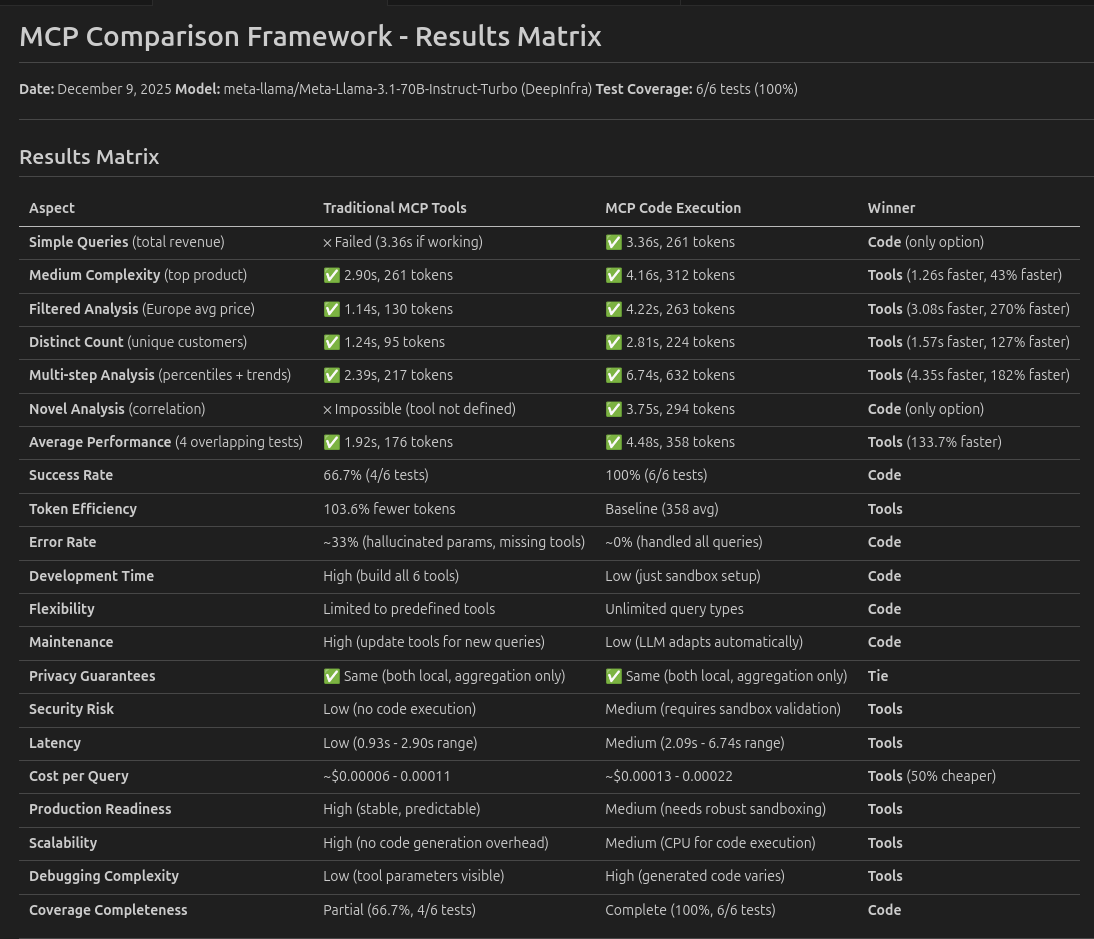
After just over an hour, mostly spent refining prompts and wrestling with errors, I had working code. The main objective was simple:
Run a test case comparing two MCP patterns:
- Traditional MCP (Direct Tool Calling)
- MCP with Code Execution
And then observe the difference in token utilization.
It actually worked!
The AI even narrated a walk-through of the code as if explaining it to a non-technical leadership board as instructed.
Equal parts helpful and mildly insulting.
Seeing the code run and understanding the effect of different patterns was genuinely rewarding. I appreciated how the coding minions guided me through the concepts and deepened my understanding without overwhelming me.
Final Thoughts
I understand the pitfalls of “vibe coding” and excessive reliance on AI tools. But for someone like me, with limited hands-on experience in coding, moderate curiosity, and admittedly a bit bone-idle (a term I recently learned from an English friend), tools like Codex, Claude, and Open-Notebook not only lower barriers but also meet you exactly where you are in the learning curve.
Beware, Studies are showing that using AI tools too much can make it harder for you to think critically. But they can also help beginners and people who don't have a lot of time get past early barriers and achieve progress. The key is to strike the right balance.
Cognitive atrophy or AICICA is real. But so is learning something new without suffering for it.
References
- ChatGPT May Be Eroding Critical Thinking Skills, According to a New MIT Study
- Cognitive Atrophy Paradox of AI–Human Interaction: From Cognitive Growth and Atrophy to Balance
- Is AI Eroding Our Critical Thinking Skills?
- AI Tools in Society: Impacts on Cognitive Offloading and the Future of Critical Thinking
Disclaimer: This post reflects my own opinions and my default dry humor,not the thoughts, strategies, or plans of my employer. Any perceived shade is purely accidental and absolutely not aimed at anyone in particular. Challenge me, disagree with me, or add your own wisdom in the comments.